Buying in Roatan: Honduras Property Rules for Foreigners
Foreigners can and do buy property on Roatan, the largest of Honduras's Bay Islands and the part of the country most widely marketed to overseas buyers. But the legal starting point is unusual: the Honduran constitution restricts who may own land on islands and near the coast, and foreign buyers rely on a specific exception that caps what one person can hold at 3,000 square metres, roughly 0.72 acres.
This guide explains how that exception works, how a typical purchase proceeds, and where buyers most often get into trouble. Property law can change and its application varies case by case, so treat this as orientation rather than legal advice, and use an independent Honduran lawyer for any actual transaction.

What the Honduran constitution actually says
Article 107 of the Honduran constitution restricts land ownership in strategically sensitive zones: a 40-kilometre belt along national borders, strips along the Caribbean and Pacific coasts, and all islands, keys and reefs. That wording covers the whole of the Bay Islands, including Roatan, Utila and Guanaja.
Taken alone, Article 107 would shut foreigners out of Roatan entirely. The route in is Decree 90-90, a 1990 law that created an exception for property in areas designated as urban, aimed at encouraging tourism and residential investment.
The 3,000 square metre limit in practice
Under the Decree 90-90 exception, a foreign individual can buy one property of up to 3,000 square metres, about 0.72 acres, provided it sits in a zone classified as urban. According to TheLatinvestor's Honduras foreign-ownership guide (updated January 2026), that limit is per person, so the practical questions for most buyers are whether the plot is genuinely within an urban designation and whether they already hold restricted-zone property.
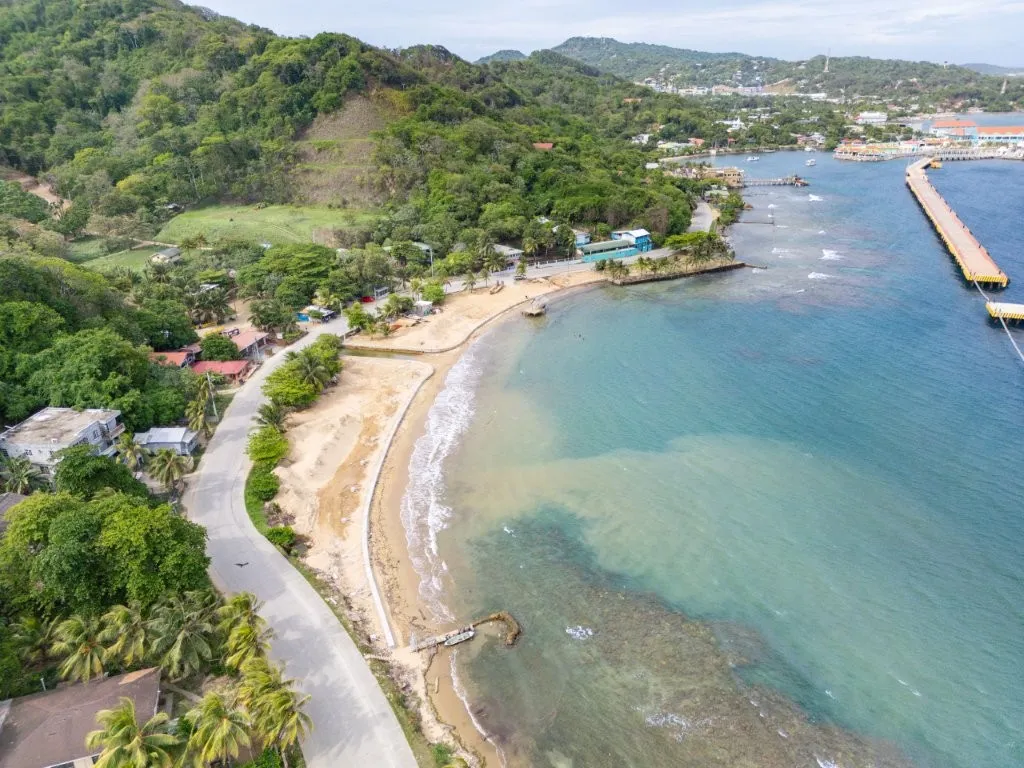
On Roatan, the established communities most marketed overseas, including West End, West Bay, Sandy Bay, French Harbour and Coxen Hole, are long-standing urban zones and generally have better title documentation than remoter parts of the island. Inland Honduras is different again: in cities such as Tegucigalpa and San Pedro Sula, foreigners can buy freehold in their own name without the size cap.
- One property per foreign individual in restricted zones
- Maximum plot size 3,000 sq m (about 0.72 acres)
- The land must fall within an urban designation
- No such cap applies in unrestricted inland areas
Larger plots and corporate structures
Local agents often present a Honduran corporation as the way to hold more than 3,000 square metres or multiple properties, and TheLatinvestor's Roatan guide (January 2026) puts formation costs at around 1,500 to 2,000 US dollars with 500 to 1,000 dollars a year in maintenance. Be aware, though, that the legal footing is debated: some analyses argue that restricted-zone land can only properly be controlled by entities that are genuinely Honduran-owned, so this is a structure to scrutinise with your own lawyer, not something to accept off the shelf.
Two arrangements deserve particular caution. A prestanombre deal, where a Honduran national holds title on your behalf, leaves you with essentially no legal recourse if the relationship sours. A registered usufruct, a real right to use and enjoy property for a fixed term or for life, is legally stronger than a simple lease but expires at the end of its term.
- Corporate structures are common but their legal basis for restricted-zone land is contested - take independent advice
- Avoid informal nominee (prestanombre) arrangements entirely
- A usufruct gives registered rights of use but is not ownership
How a purchase works
The mechanics are reasonably standard for Latin America. You will need a passport and a Honduran tax number (RTN), which usually takes about a week to obtain; residency is not required to buy. From accepted offer to registered title typically takes four to ten weeks, according to TheLatinvestor's Roatan land guide.
Costs are covered in detail in our separate Honduras buying-costs explainer, but as a headline figure expect total closing costs of roughly 3 to 7 per cent of the price, including a 1.5 per cent transfer tax. Habio's Honduras listings and buyer guides are a useful place to get a feel for what is on the market before you commit to viewings.
- Hire an independent local attorney - not one recommended by the seller
- Title search and lien check against the property registry
- Verify cadastral records and municipal standing
- Sign a promise of sale (promesa de venta) with a deposit
- Execute the public deed (escritura publica) before a notary
- Pay transfer tax and fees, then register the deed
If you plan to stay
Buying property does not itself confer the right to live in Honduras. The country runs income-based residency routes: reporting by IMI Daily (March 2026) puts the general independent-means requirement at a regular foreign income of at least 1,500 US dollars a month, with the rentista category requiring around 2,500 dollars a month in passive foreign income. Permanent residency is available after five years.
Immigration rules change and are applied through the Honduran National Institute of Migration, so confirm current requirements with the institute or a Honduran consulate before planning a move.
Frequently asked questions
Can foreigners buy property in Roatan, Honduras?
Yes. Although the Honduran constitution restricts island and coastal land, Decree 90-90 lets a foreign individual buy one urban-designated property of up to 3,000 square metres (about 0.72 acres) in restricted zones such as Roatan.
Can I buy more than 0.72 acres in Roatan?
Not as an individual in a restricted zone. Honduran corporations are widely used to hold larger or multiple properties, but the legal basis for foreign-controlled companies holding restricted-zone land is debated, so take independent Honduran legal advice before relying on that structure.
Do I need Honduran residency to buy property?
No. A passport and a Honduran tax number (RTN) are enough to complete a purchase. Residency only matters if you intend to live in Honduras long term.
How long does a property purchase take in Roatan?
Typically four to ten weeks from accepted offer to registered title, assuming the title search is clean and documents are in order.
What is the biggest risk when buying in Roatan?
Title problems, including sellers taking deposits on the same property from several buyers. Insist on seeing the registered title with its folio and inscription numbers, and have your own lawyer verify it directly with the property registry before paying any deposit.
Sources
This article is general information, not legal, tax or financial advice. Markets and rules change — verify the current position with official sources before acting. Published 2 August 2026.
Homes for sale in Honduras
Live listings on Habio, updated daily.